Articles & Guides
Bio-oil roof treatment vs. nanoparticle roof coating: What’s the difference?
A clear breakdown of bio-oil roof treatments vs nanoparticle roof coatings. Learn how each works, what they can and cannot do, and which approach makes sense for extending the life of an aging asphalt shingle roof.
By Nanoclad Team4 min read
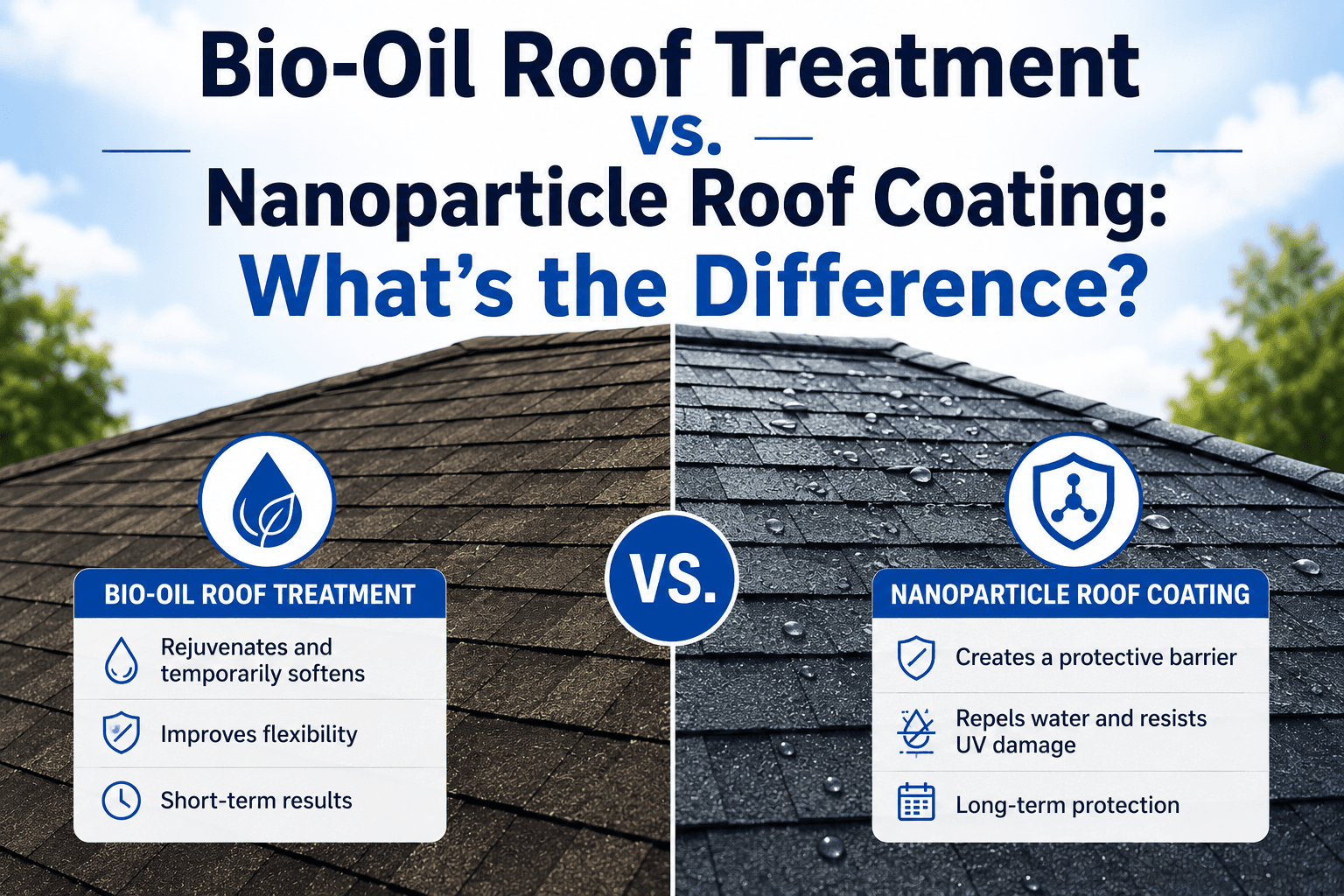
Homeowners exploring ways to extend the life of an asphalt shingle roof often run into two very different approaches: bio-oil roof treatments and nanoparticle roof coatings. On the surface, they may sound similar. Both are marketed as ways to “restore,” “protect,” or “extend roof life.” But the way they work—and what they can realistically do—are fundamentally different.
Understanding that difference matters, especially if you’re trying to decide whether your roof needs maintenance, protection, or replacement.
What bio-oil roof treatments are designed to do
Bio-oil roof treatments are typically marketed as rejuvenators. The idea behind them is that asphalt shingles lose oils over time as they age, becoming dry, brittle, and less flexible. Bio-oil products aim to reintroduce or mimic those lost oils to temporarily improve shingle flexibility.
In theory, this can help:
Soften aging shingles
Reduce brittleness
Improve short-term flexibility
Slow visible signs of aging
However, these treatments do not repair physical damage, replace granules, or fix structural roof issues. Their effect is generally surface-level and time-dependent, meaning results may fade as the roof continues to age and weather.
What nanoparticle roof coatings are designed to do
Nanoparticle roof coatings take a different approach. Instead of trying to “recondition” shingles from within, they focus on creating a protective barrier on the surface.
For example, Nanoclad Roof Shield is designed as a clear nanoparticle treatment that bonds at a microscopic level to help protect asphalt shingles from ongoing environmental exposure.
The goal is not to make old shingles new again, but to reduce the rate of deterioration caused by:
UV radiation
Moisture absorption
Weathering and oxidation
Environmental wear
In simpler terms, bio-oil products aim to modify the material itself, while nanoparticle coatings aim to protect what is already there.
Key differences between the two approaches
The biggest distinction comes down to purpose.
Bio-oil treatments are focused on rejuvenation—attempting to restore some flexibility or appearance to aging shingles.
Nanoparticle coatings are focused on protection—helping preserve shingles that still have usable life left.
This leads to several practical differences:
Bio-oil treatments tend to be more temporary in effect
Nanoparticle coatings are designed for longer-term surface protection
Bio-oil approaches may not significantly change water resistance
Nanoparticle coatings are typically engineered to improve hydrophobic performance
Bio-oil treatments are often used on roofs showing early aging
Nanoparticle coatings are best suited for roofs that are aging but still structurally sound
Neither approach is a replacement for roof repair or replacement when a roof is already failing.
What each approach cannot do
It’s important to be clear about limitations.
Neither bio-oil nor nanoparticle treatments can:
Fix active roof leaks
Replace missing shingles
Repair rotted decking
Correct structural roof failure
Restore a roof that is already at end-of-life condition
If a roof is already severely damaged, no surface treatment will meaningfully change the outcome.
When bio-oil treatments may be considered
Bio-oil treatments are generally used when:
Shingles are dry or brittle but still intact
The roof is in early to mid-stage aging
The goal is short-term cosmetic or flexibility improvement
The roof is not yet ready for replacement
They are less effective when degradation is already advanced.
When nanoparticle coatings make more sense
Nanoparticle roof coatings are typically considered when:
The roof is aging but still structurally sound
There is no active leaking
Shingles are intact with manageable wear
The goal is delaying replacement, not reversing damage
Long-term surface protection is the priority
In these cases, a protective system may help extend the functional lifespan of the roof by reducing ongoing environmental stress.
The most important question homeowners should ask
Instead of focusing only on product names or marketing terms, the better question is:
What is my roof’s actual condition—and am I trying to restore it or protect it?
That distinction determines everything.
If a roof is already failing, neither approach is a solution. If a roof still has life left, protection becomes far more relevant than restoration claims.
Final takeaway
Bio-oil roof treatments and nanoparticle roof coatings are often grouped together under “roof rejuvenation,” but they are not the same thing.
One focuses on temporary reconditioning. The other focuses on long-term surface protection.
Homeowners should be cautious of any product that promises to “restore a roof to new,” and instead focus on realistic outcomes: extending usable life, slowing deterioration, and making informed decisions about repair versus replacement.
When applied to the right roof, a protection-first approach can be a practical part of long-term maintenance—but it should never replace proper inspection, repair, or professional judgment.
See if your roof qualifies—BOOK YOUR FREE ROOF INSPECTION
Share this guide
Continue reading
All Articles & Guides
Articles & Guides
Roof Coating vs. Roof Replacement: Which Makes More Sense?
Should you restore your roof with a coating or replace it entirely? Learn the differences, costs, benefits, and how to determine the best option for your home.
Read article
Articles & Guides
Do Impact, Fire, and Wind Ratings Tell the Whole Story About Roof Protection?
Impact, fire, and wind ratings matter, but everyday roof aging matters more. Learn which roof protection factors have the biggest impact on roof longevity.
Read article
Articles & Guides
Why Haven't I Heard of Nano Roof Coatings Before?
Discover why nano roof coatings are only now becoming popular and how advances in nanotechnology have made roof preservation a practical option.
Read article